
Dental implants: candidates, bone loss, healing time and what can go wrong
Everything a patient asks before an implant, answered without marketing.
Updated 2026-10-01
Who is a candidate
Anyone missing one or more teeth with healthy gums and enough bone, or bone that can be rebuilt. Age is not the deciding factor; gum health, bone volume and general health are. Smoking matters more than most patients expect, because it reduces blood supply to healing bone and roughly doubles the failure rate.
Conditions that need managing first rather than ruling you out: uncontrolled diabetes, active gum disease, recent radiotherapy to the jaws, and some bone medications. Tell the clinic about every medication you take, particularly bisphosphonates.
What the X-ray decides
A panoramic X-ray shows bone height, the position of the nerve in the lower jaw and the sinus in the upper. Those three measurements decide whether an implant goes straight in, whether it needs a graft first, and where it can safely be placed. Nothing is planned without them.
Bone shrinks where a tooth has been missing for years, which is why a tooth lost a decade ago often needs a graft and one lost last month does not.
The sequence
Visit one, three to five days. X-ray, then the implant placed under local anaesthetic, about an hour per implant. Stitches, written aftercare, and a check before you fly. A temporary tooth is possible for front teeth.
Three to six months. The bone grows onto the implant surface. Nothing happens in your mouth and you go about your life. This is the part that cannot be shortened, and a clinic offering to skip it is offering you a weaker result.
Visit two, three to five days. The abutment and the crown are fitted, adjusted and polished. The crown is made by a partner laboratory during your stay.
What can go wrong
Early failure, two to five per cent. The bone does not bond in the first months. Smoking, gum disease and poor hygiene raise the risk. A failed implant is removed, the site heals and a new one can usually be placed.
Nerve or sinus involvement. Rare with careful planning. Lower back implants sit near a nerve and upper ones near the sinus; the X-ray is how we plan around them.
Peri-implantitis, years later. Gum inflammation around an implant that is left untreated destroys the bone holding it. Implants do not decay but they absolutely can be lost to gum disease, which is why the six-monthly cleaning matters more after implants than before.
A loose or chipped crown. Usually fixable without touching the implant.
What it costs and why quotes differ
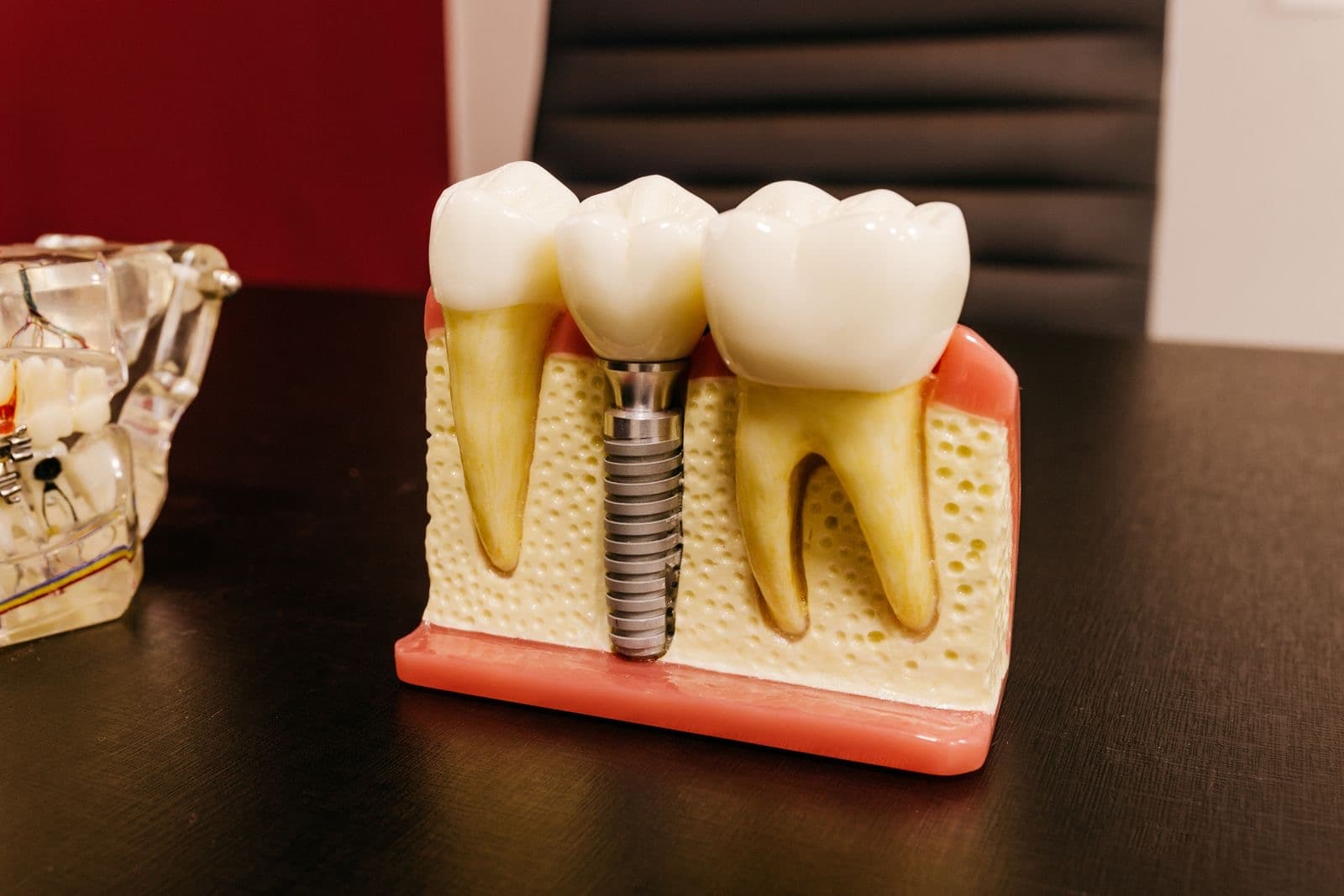
The implant, the abutment and the crown are three separate components, and a headline price that quotes only the first is the most common way quotes are made to look cheaper than they are. Ask what is included. Ask about the graft separately, because whether you need one is decided by your X-ray rather than by a package.
Brands differ in price and in how much long-term data exists behind them. Any implant you receive should come with a card recording the brand and lot number, so a dentist anywhere can identify it in ten years.
Alternatives worth considering
A bridge replaces a missing tooth in days rather than months, but it is cemented to the two neighbouring teeth, which have to be prepared. If those teeth are already crowned or heavily filled, a bridge costs them nothing extra; if they are healthy, an implant protects them.
A denture is removable and the cheapest route, and an implant-retained denture on two to four implants is the middle ground for a whole arch.
Practical points for travelling
Two trips three to six months apart, with the first the longer of the two. Swelling peaks on day two or three, so do not book your flight home for the morning after surgery. Flying is fine once the check-up is done.
See the dental implants page for the full process, or All-on-4 if a whole arch is missing.
Questions people ask
How painful are dental implants?
Placement is done under local anaesthetic and most patients describe it as easier than an extraction. Expect soreness and swelling for a few days, peaking on day two or three, managed with prescribed painkillers. We do not offer sedation.
How long do dental implants last?
Fifteen to twenty-five years or longer for the implant itself with good hygiene, while the crown on top is usually replaced after ten to fifteen. Implants do not decay, but they are lost to gum disease, so six-monthly cleaning matters more after implants than before.
Can I have implants if I have bone loss?
Often yes, with a bone graft or a sinus lift to rebuild the site, sometimes at the same appointment as the implant and sometimes months earlier. Your X-ray decides, which is why nothing is quoted before one is reviewed.
Why do dental implants need two trips to Turkey?
Because bone has to grow onto the implant surface, and that takes three to six months. The first trip places the implant over three to five days; the second fits the abutment and crown. Any clinic compressing both into one week has removed the healing.