
Turkey teeth: what the term means and how to avoid it
Over-white, over-large crowns on healthy teeth are a planning failure, not a country. Here is how to tell a good plan from a bad one.
Updated 2026-10-01
What people mean by "Turkey teeth"
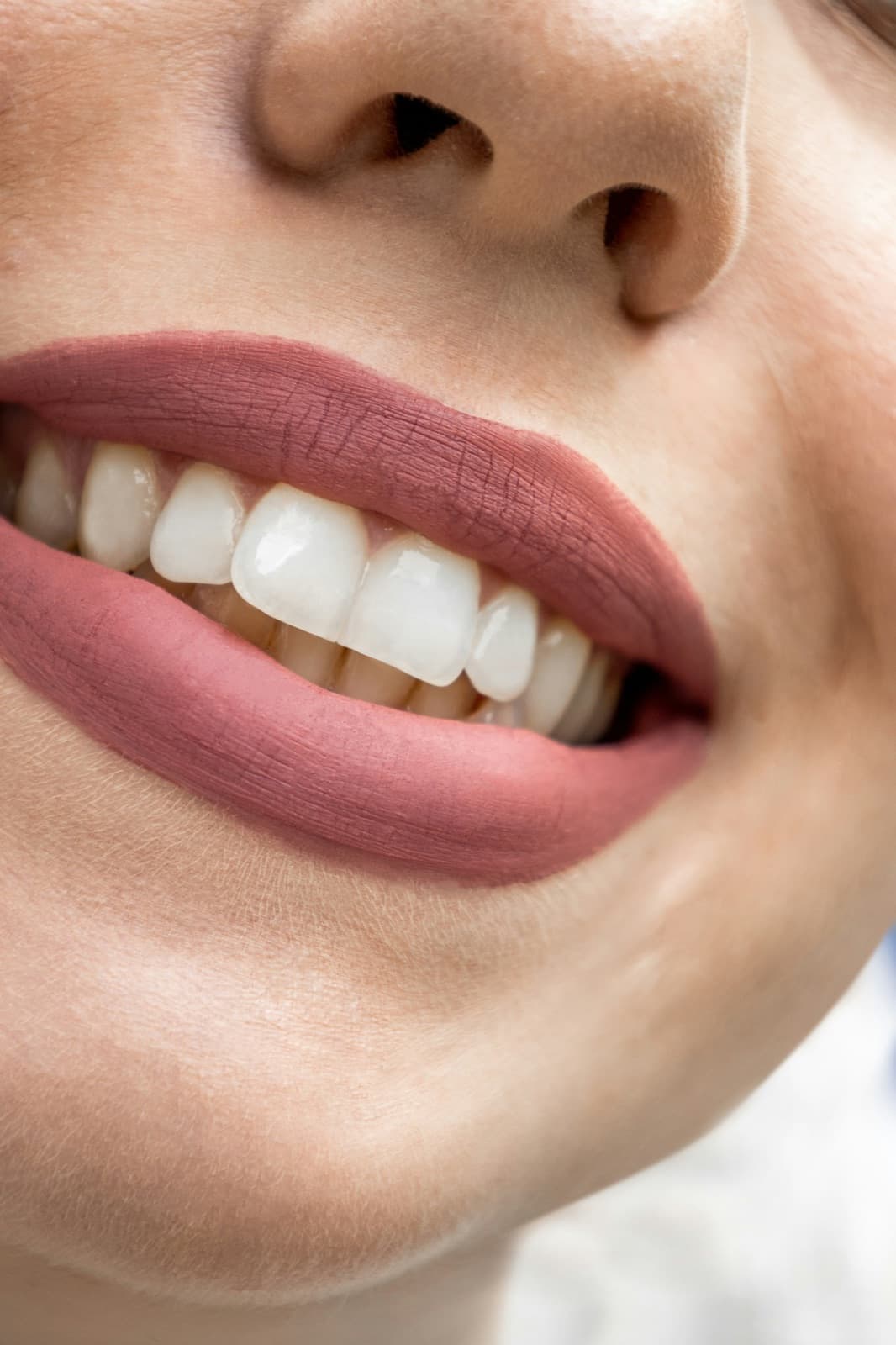
"Turkey teeth" is social-media slang for a particular look: a full mouth of bright white, perfectly uniform, slightly too large teeth. It became a phrase because of a specific failure that kept repeating, not because of a country. The failure is cosmetic crowns placed on healthy teeth, in quantity, on people who did not need them.
Why the look goes wrong
To fit a crown, a dentist removes one to two millimetres from every surface of the tooth. On a healthy front tooth that is most of the enamel. Do it to sixteen or twenty teeth and three things follow.
The teeth look bigger than the face expects, because bulk was added back where enamel was removed. The shade is uniform, and natural teeth are not: a real tooth is translucent at the edge, warmer at the gum, and no two are identical. And the teeth are now committed. Crowns are replaced every ten to fifteen years for the rest of the patient's life, and if a prepared tooth loses its nerve it needs a root canal through the new crown.
The ladder of invasiveness
Think of cosmetic dentistry as a ladder and start at the bottom:
- Whitening. Removes nothing. Lightens natural teeth two to four shades. One hour.
- Composite bonding. Adds material with minimal preparation. Rebuilds edges, closes small gaps, lengthens short teeth. One visit of one to five hours. Repairable.
- Veneers. Remove 0.3 to 0.7 mm from the front surface. Hold colour for ten to fifteen years. Two visits, laboratory made.
- Crowns. Remove one to two millimetres all round. The right answer for a tooth that is already broken down, root treated or heavily filled. The wrong answer for a healthy tooth you simply want whiter.
Most people who arrive asking for the top of the ladder belong on the first or second rung.
How to read a treatment plan
A plan that proposes crowns on healthy teeth should say why, tooth by tooth. "Because you want them white" is not a clinical reason; whitening makes teeth white. Reasons that do hold up: the tooth is root treated and brittle, more than a third of it is missing, an old crown is failing, or the tooth is so dark internally that nothing bonds over it convincingly.
Ask for the alternative too. Any plan can be written two ways, and the more conservative version tells you more about the clinic than the aggressive one does.
The shade question
Patients choose shade from a guide under clinic lighting, which is brighter and whiter than any room they will live in. The brightest shades on the chart exist for specific cases, not as a default. Looking at the mock-up in daylight, outside the clinic if possible, is worth the ten minutes it takes.
If you already have them
A full set of crowns cannot be undone, but it can be improved. Crowns can be remade in a less uniform shade and a more natural shape by a dentist who understands why the first set looked wrong. Gum health around the margins is the priority; bulky crowns trap plaque and inflamed gums are what makes the whole set look artificial in photographs.
What we do differently
Our clinic is built around composite bonding, which is rung two. Our written plan lists every tooth with its treatment and reason, and we say when you need less than you asked for. We do not place crowns on healthy teeth for cosmetic reasons.
Read is Turkey safe for dental work or compare bonding and veneers.
Questions people ask
What are Turkey teeth?
"Turkey teeth" is social-media slang for a full mouth of bright white, uniform, slightly oversized teeth, usually produced by placing crowns on healthy teeth for cosmetic reasons. Fitting a crown removes one to two millimetres from every surface of the tooth, so the look comes with a permanent commitment to replacing those crowns every ten to fifteen years.
Why do Turkey teeth look fake?
Three reasons: the teeth are bulkier because material was added back where enamel was removed, the shade is uniform while natural teeth are translucent at the edge and warmer at the gum, and the proportions follow a template rather than the patient's face. A mock-up viewed in daylight before anything is prepared prevents most of it.
Can Turkey teeth be reversed?
Crowns cannot be undone, because the enamel underneath is gone. They can be remade in a more natural shade and shape, and gum health around the margins usually improves the appearance more than people expect. The lesson is to start at the least invasive option, since whitening and composite bonding both keep the tooth.
Is composite bonding safer than crowns?
For a healthy tooth, yes, in the sense that far less tooth is removed. Bonding adds material with minimal preparation, is repaired rather than replaced when it chips, and lasts five to eight years. Crowns are the right answer for a tooth that is already broken down, root treated or heavily filled.