
Composite bonding on crooked teeth: what it can and cannot fix
Bonding can hide mild unevenness convincingly. It cannot move a tooth, and a clinic that pretends otherwise will cost you enamel.
Updated 1 October 2026
What bonding actually does
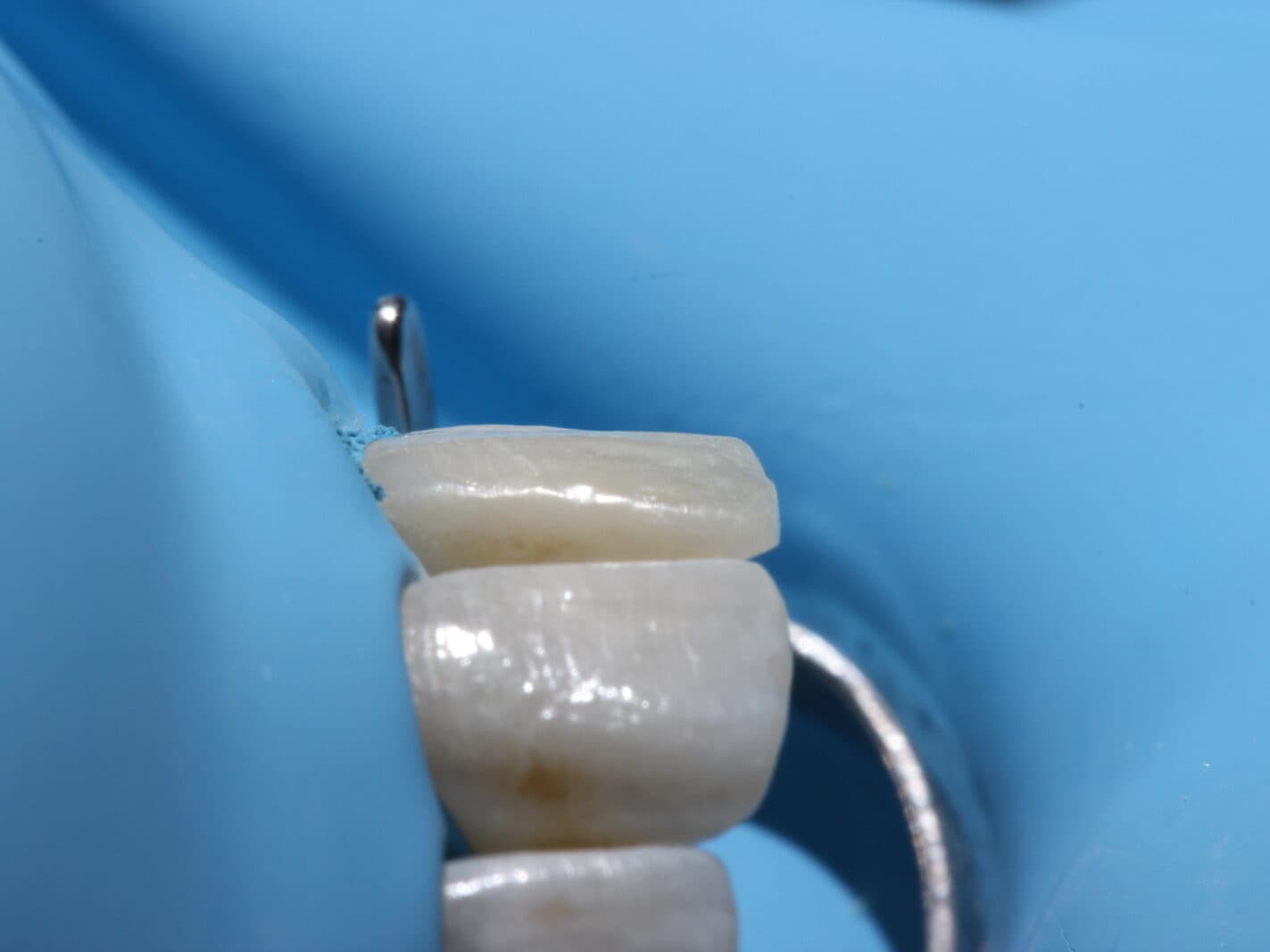
Composite is added to the surface of a tooth. It can make a tooth look wider, longer, straighter or whiter. It does not move the root, change the position of the tooth in the jaw, or alter how your teeth meet when you bite.
That distinction is the whole article.
Where it works well
Slight rotation. A front tooth turned a few degrees can be camouflaged by adding composite to the recessed corner and reshaping the prominent one. From speaking distance it reads as straight.
Small gaps. A gap of one or two millimetres between front teeth closes convincingly by widening both neighbours a little. Closing a large gap with composite alone makes two very wide teeth, which looks worse than the gap.
Uneven edges. Teeth of slightly different lengths, or worn edges, are evened out in minutes. This is the single most satisfying thing bonding does.
One tooth sitting slightly behind the others. Building the front surface forward brings it into line.
Where it does not
Real crowding. If teeth overlap, adding material to the surface makes them bulkier and more crowded, not straighter. It also creates places a brush cannot reach.
A tooth tipped well out of the arch. The only way to disguise it with composite is to cut the prominent surface back first, which is exactly the enamel removal bonding exists to avoid.
Bite problems. If your front teeth already take heavy load, adding length to them means the composite takes that load. It chips, repeatedly.
Large shape changes across the whole smile. This is where a clinic should say the honest thing: you need orthodontic treatment, or crowns, and bonding alone will not get you there.
We do not offer orthodontics
Auradentis does not do braces or clear aligners. That matters here, because a clinic that only sells bonding has an incentive to tell you bonding is enough. We will tell you when it is not, and you take that advice to an orthodontist at home, which is usually cheaper and easier than travelling for a treatment that takes a year of regular appointments.
Many patients align first at home, then fly in for bonding or whitening to finish the result. That sequence gives a far better outcome than bonding over crowding.
What minimal preparation means
Most bonding needs no drilling. On some teeth a small amount of reshaping is needed so the composite sits in the right place and the tooth does not end up bulky. It is minor, it is done with a polishing instrument rather than a drill where possible, and it should be explained to you before it happens.
Be careful with clinics promising a perfectly straight smile in three days with no preparation at all. On crooked teeth that usually means crowns on healthy teeth, which removes one to two millimetres from every surface. That is irreversible.
How to find out where you stand
Send photos from the front and both sides, plus a short video of you talking. We will say which of your teeth suit bonding, which need something else, and whether orthodontics should come first. The written plan lists each tooth, so nothing is decided for you.
More detail on the composite bonding page, or compare with veneers.